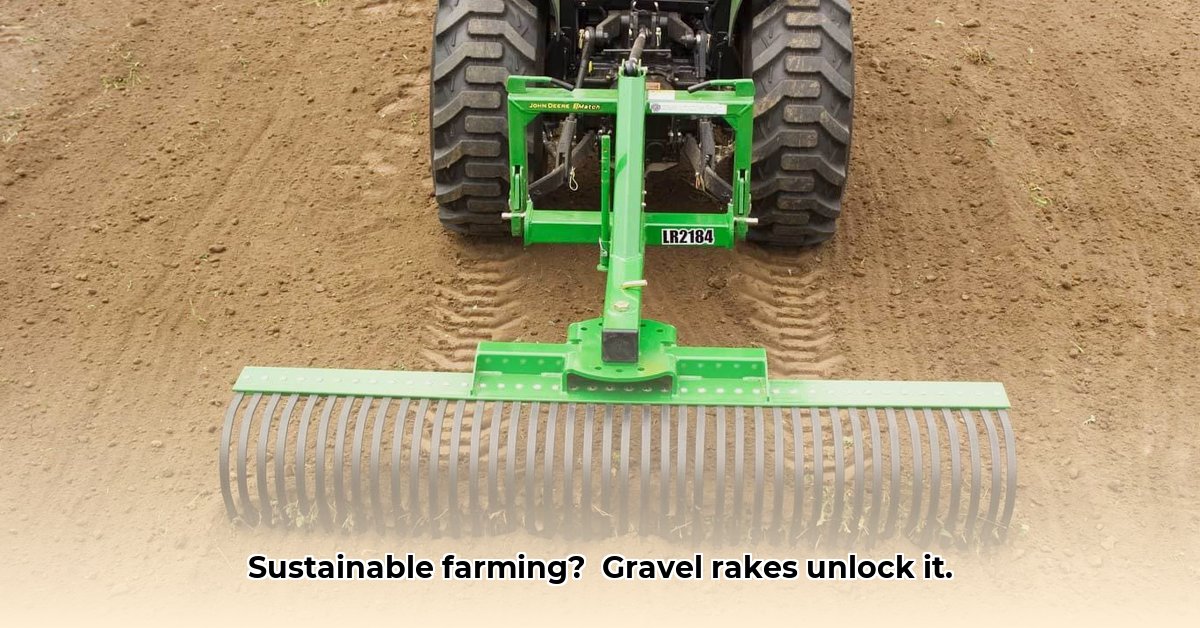
Tractor Gravel Rakes: Your Key to Sustainable Land Management
Tractor gravel rakes are essential tools for efficient and environmentally friendly farming. They're powerful allies in preparing land for planting, improving soil health, and increasing overall farm productivity. This guide provides actionable insights into selecting and effectively using a tractor gravel rake to enhance your sustainable farming practices. Don't underestimate the impact of this seemingly simple piece of equipment – it's a game-changer for many farmers. Did you know that optimized land preparation can reduce fuel consumption by up to 15%? For more in-depth information, check out this helpful resource on tractor tine rakes.
Understanding Tractor Gravel Rakes and Their Role in Sustainable Agriculture
Tractor gravel rakes are crucial for efficient land preparation. They level uneven terrain, remove rocks and debris, and create ideal seedbeds, resulting in improved crop yields. Using a gravel rake is more than just efficient; it’s a core component of sustainable agriculture.
These machines significantly reduce soil compaction, promoting better water infiltration and nutrient uptake by plants. This leads to healthier crops and a healthier environment. What's more, the improved soil health often reduces the need for chemical fertilizers, minimizing environmental impact.
The Environmental Benefits of Using a Gravel Rake
Using a gravel rake offers significant environmental benefits. It reduces fuel consumption by minimizing passes compared to other land preparation methods. This directly translates to lower greenhouse gas emissions and reduced reliance on fossil fuels. The efficient leveling also reduces water runoff, optimizing water usage and conserving this precious resource. Efficient irrigation leads to stronger yields and better overall crop health.
Types of Tractor Gravel Rakes: Choosing the Right Tool for the Job
Several types of tractor gravel rakes cater to various farm sizes and needs. The choice depends on factors like acreage, soil type, and budget. Understanding the options is crucial in making the right decision.
- Single-tine rakes: Suited for smaller farms and precise leveling in confined spaces. They're cost-effective and easy to maneuver.
- Multiple-tine rakes: Ideal for larger fields and removing larger debris. They offer higher efficiency for extensive land preparation.
- Rotary rakes: Best for large-scale operations seeking a very smooth finish. They're powerful and highly efficient but typically represent a higher investment.
Beyond these basic types, consider features like tine spacing, tine material (steel, hardened steel, etc.), and overall build quality. Some rakes offer adjustable settings allowing adaptation to different soil conditions and tasks. Consulting a farm equipment specialist is highly recommended for personalized guidance.
Selecting the Perfect Rake: A Decision-Making Framework
Choosing wisely means maximizing your investment and ensuring long-term sustainability. Consider these key factors:
- Farm size (acres): Larger farms require larger, more powerful rakes. Smaller farms may benefit from compact, maneuverable models.
- Soil type: Rocky or gravelly soils need sturdy rakes with robust tines. Softer soils may benefit from rakes with adjustable settings.
- Budget: Balance initial investment with long-term operational costs and fuel savings. Consider financing options.
- Specific goals: Determine whether your primary focus is leveling, rock removal, or fine grading. Your choice should directly align with your objectives.
- Tractor horsepower: Ensure your tractor has enough power to run the rake safely and effectively. Check the manufacturer's specifications.
Before committing, visit a local farm equipment supplier to examine different models firsthand. Talking to experienced farmers who have utilized these tools will provide priceless insight into real-world performance.
Operating Your Tractor Gravel Rake: A Step-by-Step Guide
Efficient and safe operation is essential for maximizing equipment lifespan and avoiding accidents. Follow these steps precisely:
- Pre-operation inspection: Thoroughly check the rake for loose bolts, damaged tines, or other potential hazards before starting the tractor.
- Proper hitching: Securely connect the rake to your tractor's three-point hitch, following the manufacturer's instructions strictly. Improper hitching is a leading cause of accidents.
- Adjusting angle and depth: Adjust the rake's angle and depth to match the terrain. This ensures optimum leveling and rock removal. Always begin with shallow passes; this is safer and helps prevent clogging.
- Safe operation: Operate the rake slowly and steadily, avoiding sudden movements. Don't overload the rake; work within its designated capacity.
- Post-operation maintenance: Clean the rake thoroughly after each use. Lubricate moving parts according to manufacturer recommendations. Proper storage prevents corrosion and extends the rake's lifespan.
Remember, safety is paramount. Never operate the equipment if tired or unwell. Always wear appropriate safety gear, including eye protection and hearing protection.
Sustainability in Action: Environmental Benefits and Considerations
Using a tractor gravel rake is a fundamental aspect of building a sustainable farming operation.
Key advantages for sustainable agriculture:
- Reduced fuel consumption: Efficient land preparation translates directly to lower fuel usage and reduced emissions.
- Improved soil health: Careful operation minimizes soil compaction, promoting better water retention and nutrient absorption.
- Optimized water usage: Level fields reduce water runoff, improving irrigation efficiency.
- Reduced chemical inputs: Healthy soil from improved land preparation contributes to healthier crops, often reducing the need for chemical fertilizers and pesticides.
Potential drawbacks and mitigation strategies:
- Initial investment cost: Consider this a long-term investment that will pay off in increased efficiency and reduced operational costs over time.
- Potential for soil disturbance: Improper use can lead to soil erosion. Careful operation and appropriate adjustments minimize this risk.
- Maintenance needs: Regular maintenance is crucial for longevity. Preventative maintenance extends equipment life significantly.
Dr. Emily Carter, Professor of Agricultural Engineering at Cornell University, states, "Investing in efficient land preparation equipment like gravel rakes is not just about immediate savings; it's a cornerstone of building resilient and sustainable farm operations."
Mastering Tractor Gravel Rakes for a Thriving and Sustainable Future
Choosing the right tractor gravel rake is a significant step towards sustainable land management. It’s about achieving optimal productivity while minimizing your environmental footprint. Remember that careful planning, equipment selection, and safe operating procedures are all vital to achieving your goals. The right tool increases your bottom line; builds a more sustainable farm operation; and contributes to a healthier environment.